

Leaving the flat world behind
The world’s first 3D-printed trabecular surface
Andrew Medical is a company that develops high quality innovative solutions, creating a new approach to implantology using the full potential of the most advanced existing digital technologies. The vast experience in key sectors, the huge investments in scientific research and the attention to the requests of an extremely demanding market, have led to the development of a production process for the construction of more advanced and effective ever 3D Printed implantable medical devices.
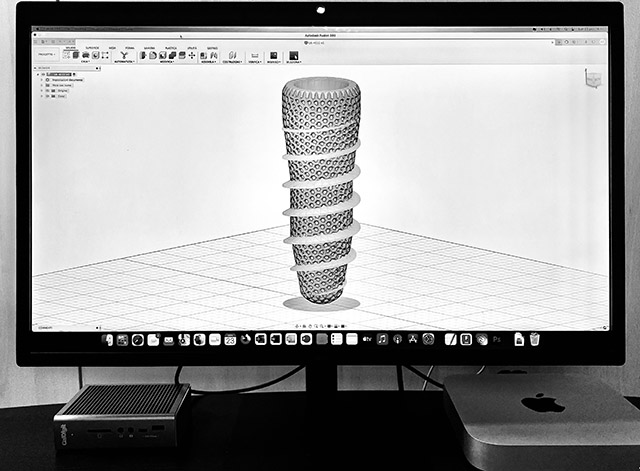
Unique 3D Printed Surface that Builds our Exclusive Line of Dental Implants
Discover ALL its Features

According to studies conducted in vitro, the topography of implant surface seems to influence the interaction between material and bacteria. This novel titanium surface, characterized by antiadhesive activity, could help to prevent medical device infections[1].
The open cell form of surface improves osteoconductive properties and adhesion behaviour of Dental Pulp Stem Cells (DPSC)[2]. Tests results highlighted that the open cell form with interconnected pores, resembling the inner structure of the native bone, allows cells to better adhere inside the specimen. Likewise, tests shown more suitable osteoconductive properties, being the profile of osteogenic markers improved. Results demonstrated that the surfaces have a dynamic influence on DPSC behavior toward adhesion and osteogenic commitment.
[1]: D’Ercole, S.; Mangano, C.; Cellini, L.; Di Lodovico, S.; Atalayin Ozkaya, C.; Iezzi, G.; Piattelli, A.; Petrini, M. A Novel 3D Titanium Surface Produced by Selective Laser Sintering to Counteract Streptococcus oralis Biofilm Formation. Appl. Sci. 2021, 11, 11915. https://doi.org/10.3390/app112411915
[2]: Gallorini, M.; Zara, S.; Ricci, A.; Mangano, F.G.; Cataldi, A.; Mangano, C. The Open Cell Form of 3D-Printed Titanium Improves Osteconductive Properties and Adhesion Behavior of Dental Pulp Stem Cells. Materials 2021, 14, 5308. https://doi.org/10.3390/ma14185308
[3]: Gallorini M, Ricci A, Pilato S, Fontana A, Mangano C, Cataldi A, Zara S. Innovative 3D-Printed Titanium Specimens Favor a Modulation of Inflammation in Dental Pulp Stem Cells During Liposome-Triggered Mineralization. Int J Oral Maxillofac Implants. 2024 Oct 25;0(0):1-31. https://doi.org/10.11607/jomi.11129 Epub ahead of print. PMID: 39453712.